Saturday, March 14, 2009

Google Earth - another Mars feature added.

I'm amazed how cool this thing keeps getting all the time and it's still totally FREE! Google just added another feature to the Google Earth software (that Mars part of it actually). Now you can see almost live images from the orbiters just hours after they are downloaded and processed. It also has a feature where you can see the orbital paths of the spacecraft, targets they are going to photograph, and a "ride along" view from orbit.
There are 3D models of the landers (check out the Viking landers for example) sitting on the surface as well as photos of them from orbit. Beagle-2 crash site still hasn't been tracked down yet though.
As a bonus feature, there are also historical maps of Mars including Percival Lowell's view with all the canals and "Martian cities" that can be seen.
To see the Mars features, you need Google Earth 5.0 and then simply click the planet icon and pick Mars.

Earth Hour - Seattle is actually participaiting this year

This is kind of exiting news. I found out that Seattle is actually on the list of participating cities for Earth Hour this year. Earth Hour is where you turn off all your lights and electric appliances for one hour on March 28 between 8:30 and 9:30pm. If you turn off your power, you are voting for Earth, leave the power on, you are voting for Global Warming (no comments on our Seattle winter!). Earth Hour started in 2007 with Sydney Australia when 2.2 million homes switched off. 2008 it grew to 50 million homes. This year the goal is for 1 billion people to pull the switch.
See the photo of the Sydney bridge. Notice that you can't see the sky when the lights are on, but when the lights turned off, the sky is visible - cloudy, but visible.
If enough turn off, and skies are clear maybe the Milky Way will be seen for the first time in decades from around Seattle, I think that would be an awesome goal for Seattle if we could darken the skies long enough to see what was lost many years ago. Yeah....skies need to be clear for that to happen, but maybe we'll get lucky this time?


Wednesday, March 11, 2009

ISS second brightest thing in the sky - after STS-119 gets there.

Another launch scrub for Discovery STS-119. Seems there was a hydrogen leak at a seal where it attaches to the tank which was discovered during fueling. The next launch day is no earlier than Sunday now.
When it does get up there, the main task of this flight is to complete the solar panel "wings" of the space station. Once the 4th set of panels are installed, the ISS will become the second brightest object in the night sky. Venus will be bumped into third place by the ISS. The moon takes first place, not counting the sun since that is a daytime object (actually creates the daylight so that's cheating to count the sun).
Must be frustrating to be an astronaut, all excited the night before and unable to sleep - almost like waiting for Santa on Christmas when you were a kid (but later found out that it was just mom and dad).
At least I'd be pretty excited about flying on the shuttle!

Tuesday, March 10, 2009

When are the skies always clear in Seattle??

During the full moon.
This must have something to do with gravitational pull, the tides, dim comets in the sky, magnitude of the moon, or the amount of frustration of Seattle deep sky observers?
Again, the theory comes true.

Clear skies (Seattle) = [Sky] - [Clouds] + [Full moon] + [maximum natural light pollution]

Clear Sky Chart:


Moon Phase:


Full: March 10
Time: 4:09pm


Satellite:


Forecast:


Yep. Just another night indoors watching Netflix movies....

Monday, March 9, 2009

Dr. Charles Simonyi's next vacation.

Our neighbor in Bellevue, is once again about to depart on his second trip to the ISS. Dr. Charles Simonyi will leaving for the ISS on March 26th at 6:49 am CDT (4:49am Pacific time). Dr. Simonyi is going to be the final space tourist since later this summer the ISS crew will finally grow to 6 astronauts (currently 3) and there just won't be enough room for visitors now matter how much money they pay to go up there.
Our club had Dr. Simonyi as a guest speaker last October where he gave a great slideshow of his trip and was just a lot of fun to talk to. Easy to see he was very exicted about getting the chance to go up again.
This time he'll be part of the crew of the TMA-14 spacecraft along with Commander Gennady Padalka, NASA flight engineer Michael Barratt. Dr. Simonyi will return to Earth on April 7 with Expedition 18 Commander Michael Fincke and Flight Engineer Yury Lonchakov.

After several delays, STS-119 is finally going to launch to the ISS this coming Wed. March 11. More on that later....

Friday, March 6, 2009

Backwards astronomy - looking down from the sky at ship contrails

Quite often off the West coast of the US when the conditions are just right, these long worm-like clouds can be seen out in the Pacific. I see it quite often from the images from my basement satellite station. The last couple days have been good for these to form. So what is this stuff?
Answer: ship contrails.
Yes, ships will leave contrails as they sail along just like a plane will do when it flies through the sky high enough for the water vapor from the engine exhaust leaving the nice white trail. The image on the right was taken yesterday (March 5) from the new NOAA-19 satellite that was recently launched. (Click for full size)
Here is a good description I clipped from the NASA Visible Earth web site:
In recent years, scientists have turned their attention to the ways in which human-produced aerosol pollution modifies clouds. One area that has drawn scientists. attention is "ship tracks," or clouds that form from the sulfate aerosols released by large ships. Although ships are not significant sources of pollution themselves, they do release enough sulfur dioxide in the exhaust from their smokestacks to modify overlying clouds. Specifically, the aerosol particles formed by the ship exhaust in the atmosphere cause the clouds to be more reflective, carry more water, and possibly inhibit them from precipitating. This is one example of how humans have been creating and modifying clouds for generations through the burning of fossil fuels.


Thursday, March 5, 2009

Mars dune buggy - Opportunity

With guidance from above with the MRO watching it's progress, Opportunity is crossing the dunes to Endeavor crater. It still has about 17km to go, and expected to take about two years to get there.
Here is the latest image of the rover crossing the dunes like a dune buggy. The MRO is also being used to pick out a path for the rover to travel to avoid getting stuck in the soft ground. That's happened, but the tough little rover has always became-unstuck by basically "gunning the engine" backwards for a long time.
The latest photo was taken on sol 1783 (remember, 1 sol is about 39 minutes longer than an Earth day).

(click to enlarge the image to see the rover [red arrow])

Wednesday, March 4, 2009

Registax 5 beta is out.

If you do any planetary imaging, you probably know about a free program called Registax. If not, you better download it and try it.
Version 5 is out although still beta, I'm sure it works well. I've used it for years for stacking planet and lunar images. What is this 'stacking' thing? It is when you take a few hundred short exposures of a planet or lunar surface, save it as an .avi video file. When you play the file in a media player you see a video of the view you see through the scope. Unless you are very lucky to have stable skies, your image of Saturn may be bouncing around looking like a tossed water balloon jiggling. You'll see some brief peeks where it looks very sharp, but then the atmosphere distorts it again. Registax will go through the file, sort out the best images, line them up and stack them on top of each other forming a very sharp image.
Compare amateur stacked images with an 8 inch scope with the old Mt. Palomar 200 inch images. Ours our much better!

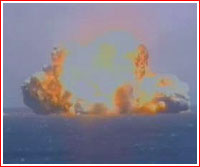
Great balls 'O fire - if the Saturn V blew up on the pad.

Here is some possibly kind of dry documents that I came across on the CollectSpace forums. There is a bit of Calculus and scary graphs, but still a bit of easy to understand English in there also. So of the Saturn V blew up on the ground there would be a fireball which would last about 33 seconds (20 seconds for the smaller Saturn 1B) and a temperature of up to 2500 degrees F.
The other document has some estimates on how fast the crew could escape from the mess if they pulled the abort handle to fire the escape rocket. Unlike the shuttle, failure did have an option.

Tuesday, March 3, 2009

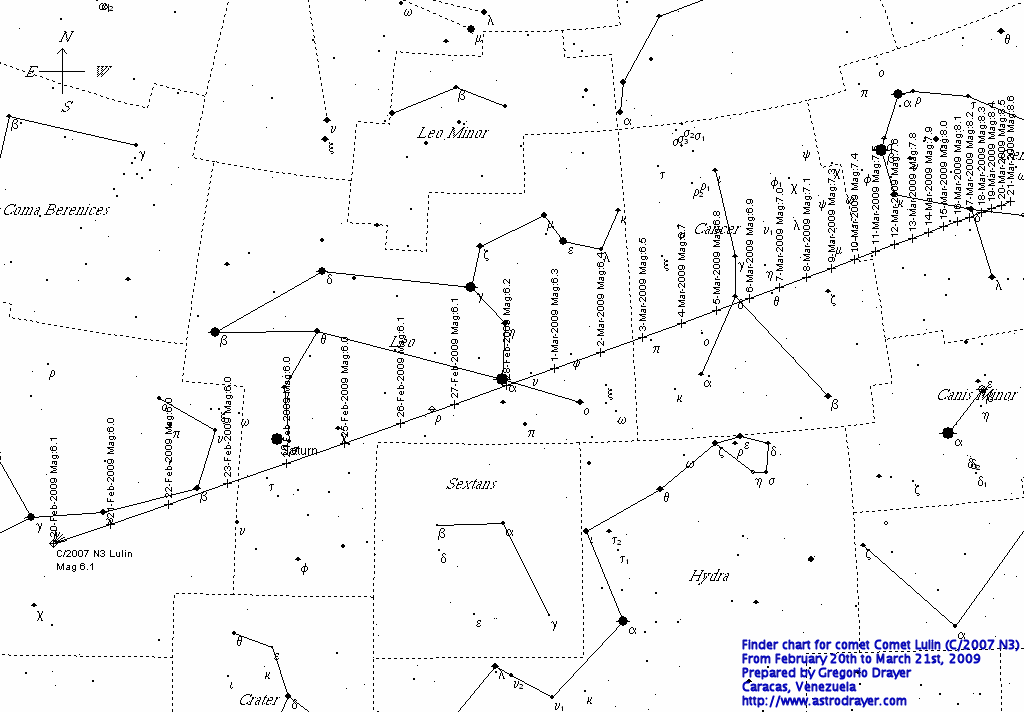
Sucker hole astronomy - more Comet Lulin.

I was flat on my back last night watching a few commercial zapped shows recorded on my MythTV (I'll have to post an entry on this system sometime, it's awesome) last night. Almost to the point of being a bit too cozy next to the fire and falling asleep. I got up to grab a glass of chocolate milk and did a peek outside out of habit. CLEAR!
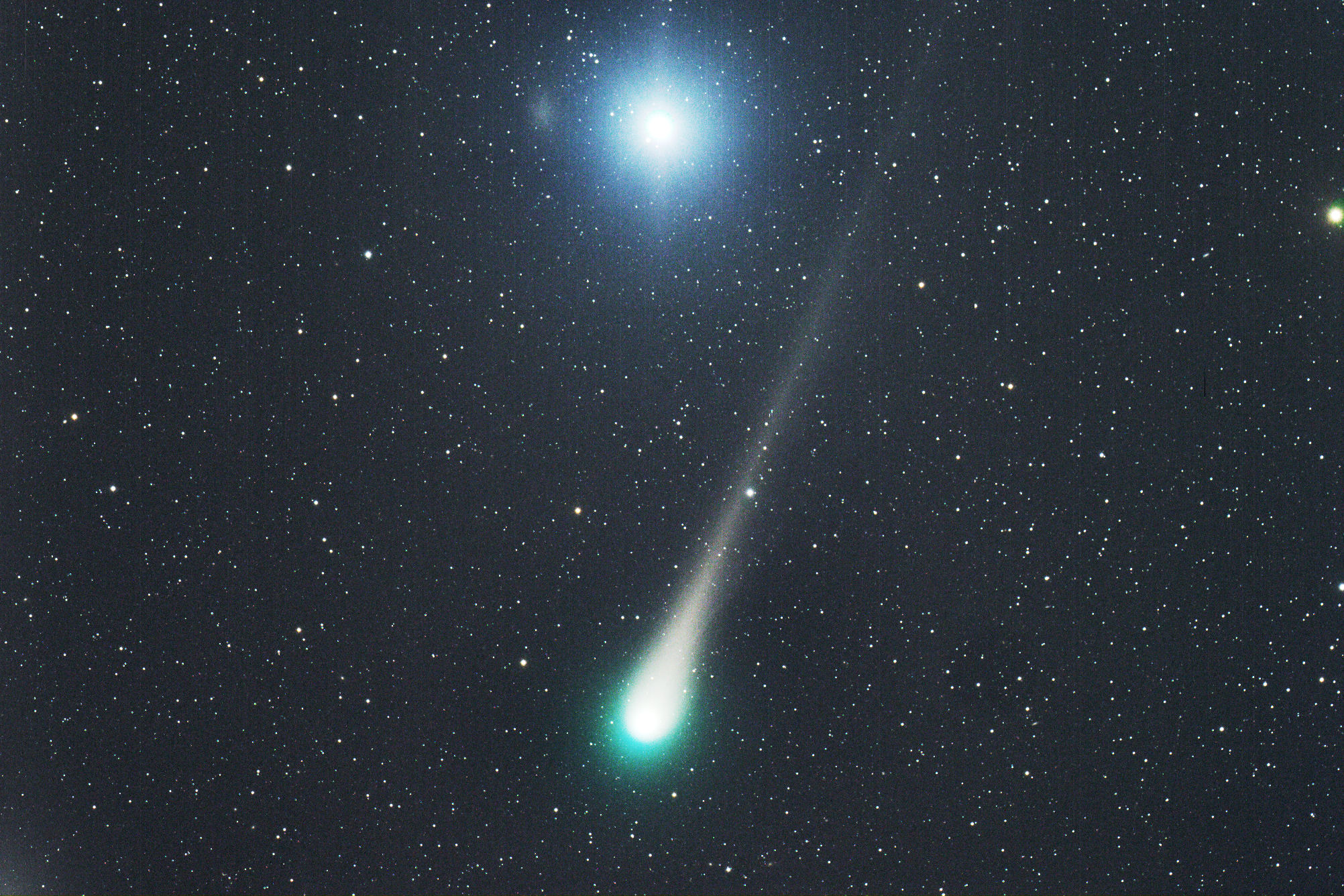
I grabbed my Canon camera, and headed out back to boot up the observatory and open the roof. I managed about 45 minutes before the sky slammed shut again on me at about 11:20pm. I got 11 good images of Lulin and tried a different method of flat frames. This time I didn't twist the camera and screw up everything. My flat field with the dust images, fit exactly on my light images, subtracted the annoying blobs, and I got some shots that I'm happy with finally. No international processing effort needed this time. The comet was about 6.4 magnitude and is fading about .2 magnitude each night now as it speeds away from Earth.
Another thing I'll add about the weather here, I'll sometimes look out in the early evening and see it's totally clouded over. I'll spend the evening watching a movie then look out again just before going to bed only to see it totally clear. Frustrating!
Here is what a good day in Seattle looks like. This is the view from my office window in Seattle. This is usually followed by clouds after sunset....
(click on the images for full sized view)

Monday, March 2, 2009

Asteroid just passed us last night.

Last night it was possible (not in Seattle - clouds!) to see an asteroid pass the Earth at just 0.000482 AU (or 46,478.5 miles). That is well inside the moon's orbit which is approximately 250,000 miles, and about twice the distance of a Geostationary satellite (23,000 miles). So there was no chance it would knock out a DirecTV satellite and cancel the last few episodes of "ER".
But, if this did hit the Earth it is about he size of the thing that hit Tunguska back in 1908 - so it had the potential to cause a mess. Estimated size is 30-40 meters. It was about 11th magnitude so it was a pretty dim target to find, but with a telescope pointed in the right area taking a series of photos it would be possible to see it moving against the stars in the background.
This video was taken by Robert McNaught - yeah the same guy that got the bright comet named after him.
APOD also had this familiar photo from 1972 published in the site today. This is one that skipped off the atmosphere and went back out into space. But performed a nice little airshow on it's brief visit.

Sunday, March 1, 2009

A good comet site I just came across - and another weather rant.

I came across a good web site by Gary Kronk who has a really good article about comet Lulin. A bunch of stuff about the discovery, early photos as well as current images.
Sad how the biggest astro event so far this year has been going on for a couple months, and we just can't even get any good nights to see anything here in Seattle. Yes, I'm still really upset about the weather change on Friday (see previous blog entry). But look at this satellite image from this morning, nobody on the west coast is spared today.

Oh, also on Friday there was a nice conjunction of Venus and the moon. My girlfriend is down in California this weekend and called me "Tom! The moon and Venus look so beautiful tonight. Did you see them?" I answered with a sharp "NO!" followed by a spew of profanities.
(Photo by Paul Kinzer)

Only about 20 more days until spring.